_edited.png)

The biggest "bottle job" in England's World Cup history: Why must Thomas Tuchel and his players share the blame for a cowardly performance against Argentina?

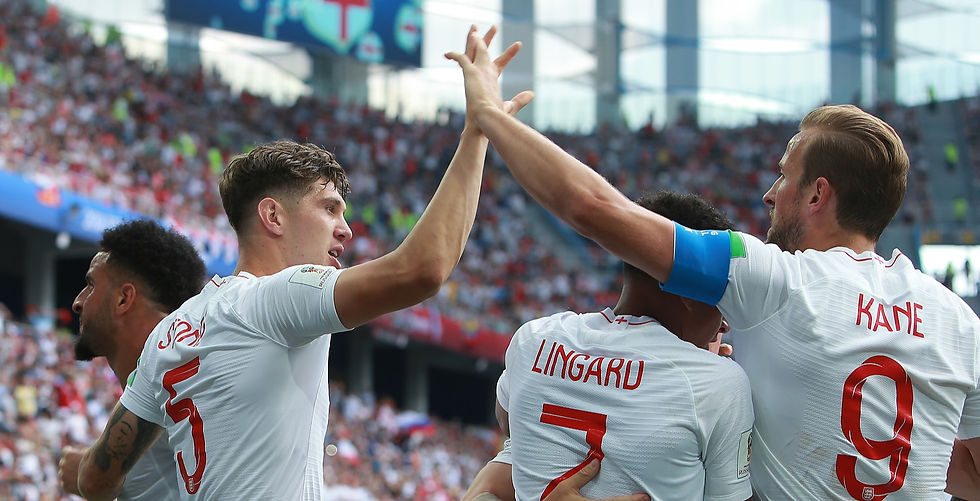
England were only a few minutes away from reaching its first FIFA World Cup final since 1966. The Three Lions had taken the lead and held on to it for the majority of the second half, appearing to be on their way to a dream final against Spain in New York on Sunday.
However, in a span of just 7 minutes, everything collapsed for Thomas Tuchel's side, and instead of bringing it home, the English team went home instead.
The defending champions were stunned by Anthony Gordon's 55th-minute goal, but Enzo Fernandez's screamer from outside the box in the 85th minute, followed by super-sub Lautaro Martinez, completed the remarkable "remontada" as England crashed to an agonising 2-1 defeat, marking yet another disappointing semi-final exit.
They came close to reaching the final in 2018, but were eliminated by Croatia; they lost the UEFA Euro 2021 to Italy on penalties; they were knocked out by France in the quarter-finals of the 2022 World Cup; and they lost the UEFA Euro 2024 to Spain again. Argentina's loss added salt to their already sore wounds.
The English media, most ex-players, pundits, and fans are blaming Thomas Tuchel, which is the simplest thing to do following a disappointing loss. The German deserves a fair amount of criticism, but the Three Lions performed admirably on their way to the semi-finals, and even against Argentina, they were sharp and went head to head with the holders.
England's press was excellent in the first half; they didn't allow Argentina to get comfortable on the ball, and they were great in transition. Gordon's goal, which put England ahead 1-0, was the result of that. However, once they took the lead, their entire strategy changed.
Tuchel admitted that his team became extremely passive and unable to hold the ball, forcing him to make more defensive substitutions to manage the game. However, he added that it was one of his team's best performances at the World Cup.
“We were so close, but we got too passive after we scored. We were close but couldn’t keep the level up after we scored,” said Tuchel.
"In the moment, no regrets. The team gave everything, and we were very, very close and deserved to be up one-nil, playing one of our better matches, maybe the best match in the circumstances. The team was top; we couldn't bring it over the line.” (sic)
He added, "That's just the nature of the game. As soon as you lose, you get criticised. No one knows what would have happened if we'd made different decisions. So it makes no sense to engage in that and lose my head. I'm responsible for them; I took them, so I take the criticism. That's just the way it is.” (sic)
Thomas Tuchel must clearly accept responsibility for the loss in this case. After England took the lead, he watched Argentina gain confidence and pile on the pressure, creating numerous chances. Tuchel's plan was to stick with the initial 4-4-2 structure, but it became more passive, making possession difficult to control as Lionel Scaloni's team attacked like a pack of wolves.
Substitute Nicolas Gonzalez forced a brilliant save from Jordan Pickford, and Alexis MacAllister hit the post with a point-blank header. When the German coach saw his team clearly struggling, he made defensive substitutions, not to win the game, but to avoid losing it.
The players must also accept responsibility. Tuchel had not previously instructed his team to surrender the ball and sit back deep to manage the game. The players stopped pressing effectively after their goal, and Argentina had gained momentum, so they could have conceded a goal anyway.
As the Three Lions struggled to keep possession of the ball, Argentina applied more pressure, and even the skipper Harry Kane admitted that his team aimed to maintain the 1-0 lead. Playing against Argentina, which has the greatest player of all time, this approach is a recipe for disaster.
The Three Lions' bench included players capable of changing the game. Bukayo Saka, Marcus Rashford, Ollie Watkins, and Kobie Mainoo should have been brought on to counter Argentina's pressure. However, both the manager and the players chose a passive approach to the game, as they had done against Mexico and Norway in previous knockout matches.
Argentina's equaliser was an unavoidable consequence of England's retreat. Seven minutes later, Lautaro Martinez scored from Messi's cross to end England's misery. With nearly 7 defensive players on the pitch, they had no way to attack, and Argentina smelt blood and pursued the three lions down.
Who should be held responsible? Both the players and the manager became too passive, and the players failed to do the basics correctly, such as keeping the ball, maintaining pressing intensity, and being more brave.
England did not lose this game because Argentina dominated. They took the lead and had complete control of the tie, only a few minutes away from a historic World Cup final.
They simply bottled it, as they have in recent tournaments. Tuchel should be held accountable for his tactical failures, while the players must be held accountable for failing to execute the basics correctly.
Argentina were simply brilliant in the final few minutes and deserved to advance to the final, but England shot themselves in the foot by allowing Lionel Scaloni's side back into the game, which is why this is the biggest English "bottle job" ever.


Comments