_edited.png)

From the scars of war to the World Cup: Bosnia and Herzegovina's remarkable football story of resiliency

Updated: Jun 22
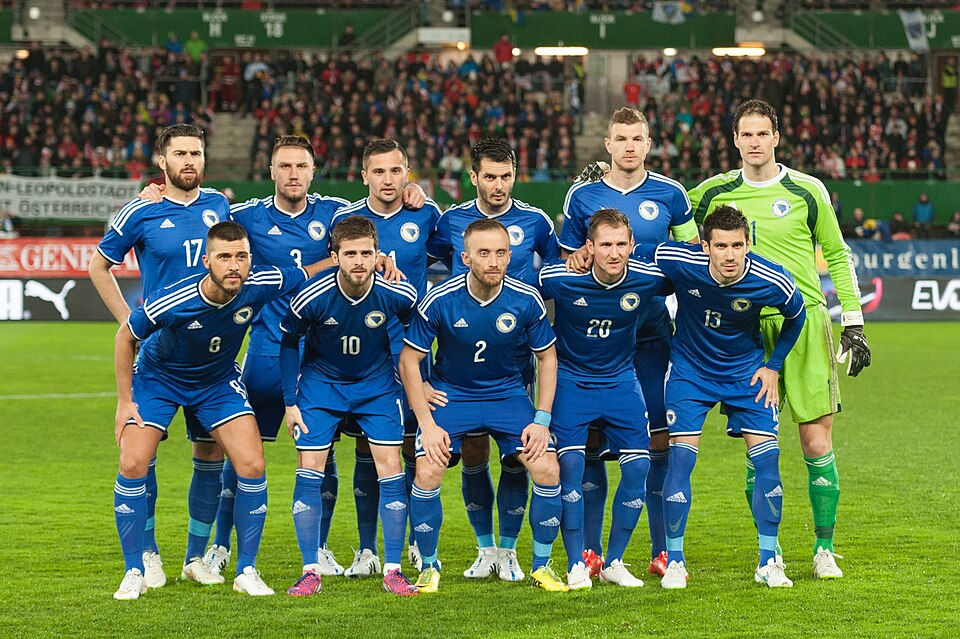
Football has traditionally been about scoring goals, winning games, and achieving glory. However, the most powerful stories aren't always about champions or goal scorers but about survivors and fighters who dare to believe. Bosnia and Herzegovina, which defeated Italy to qualify for the 2026 FIFA World Cup and drew 1-1 with hosts Canada in their first group game, symbolises that spirit more than any other country.
Bosnia and Herzegovina took the pitch against Canada with more than just sporting goals. They carried the hopes and dreams of a nation that had survived war, genocide, siege, and unimaginable loss before rebuilding itself in just 30 years to return to football's pinnacle, which unites the entire world. For most viewers, Bosnia is just another underdog competing in the World Cup, but for Bosnians, the significance is far greater.
They gained independence in 1992 following Yugoslavia's disintegration, which resulted in the formation of six new countries: Slovenia, Croatia, North Macedonia, Serbia, Montenegro, and Kosovo. Despite achieving independence, what followed was one of the most gruesome and bloody conflicts Europe had seen since World War II. The Bosnian War lasted nearly four years, killing over 100,000 people and displacing millions who sought refuge. The entire nation had become a battlefield.

The horrors peaked in 1995 with the Srebrenica genocide, in which over 8000 Bosniak men and boys were slaughtered, and it remains one of the darkest moments in European history. Current Bosnia player Esmir Bajraktarević's parents were among those directly affected by the tragedy. Before his birth in the United States, his parents were forced to flee their home country. Today, Bajraktarević represents Bosnia on the global stage as a living symbol of a generation that survived and persevered after the genocide.
Edin Dzeko, Bosnia and Herzegovina's greatest player of all time, was also a child during the turmoil. Before becoming a national hero, he was a child caught up in the Siege of Sarajevo. For years, the capital city was subjected to constant shelling and sniper attacks, leaving residents without basic necessities. He had to grow up in the midst of explosions, fatal shelling, and fear. Dzeko made it through those years when many others did not, and he is now a symbol of hope for many Bosniaks.
Despite the destruction all over the country, football never died. The Bosnian War resulted in so many casualties that there was no room in the graveyards, so football stadiums were temporarily used as graveyards to bury the dead. Children played football on war-damaged concrete streets, not fields or stadiums. The simple act of playing football became a form of resistance, and every child wished for a better future.

In 1993, tragedy struck during the Dobrinja Massacre, when a mortar shell landed among children playing football on the streets, killing 13 and injuring over 133. A game that once gave people hope became yet another reminder of the brutal reality. It's difficult to put into words what the country went through during those four years, let alone how it changed after the war. Despite the violence, football persevered.
In the years that followed, the nation gradually rebuilt. The national football team evolved into a symbol of unity and hope, rather than just a sporting representation. In a nation divided by politics and violence, football provided the only solution capable of uniting people and giving them hope for a better future. The golden generation led by Edin Dzeko, Miralem Pjanic, and Asmir Begovic accomplished something most Bosniaks thought was impossible: they qualified for their first FIFA World Cup in 2014. Watching them raise their national flag on a global stage after only two decades of war felt like a victory in and of itself.
Bosnia's return to the World Cup this year represents yet another milestone in their remarkable journey thus far. The national team players are from a generation raised in the shadow of conflict, and they are determined to be a source of hope for their people while also erasing the painful memories of tragedy. Every four years, the World Cup brings many stories, some of which revolve around players and nations vying for glory, but Bosnia's is different. It's about fighting and perseverance.
It's the story of children who used to play football on concrete streets while mortal shells exploded all around them; it's the story of families who fled their homeland and lived to see their children play for their country on global television. This is the story of a nation that could have been wiped off the map but refused to disappear and is still fighting today. Their presence at the 2026 World Cup represents more than just football; it serves as a reminder that football can bring hope even in the darkest moments of human history.
They drew their first game with the hosts, Canada, for a point, and their next results will determine how far they progress in the World Cup. They may not even make it out of the group stages, but their most significant victory came against Canada. From the ruins of war, where football fields were graveyards, to the grand stage of the World Cup, they're living proof that resilience can overcome any adversity. Every time they step onto the pitch, it is an act of defiance and resistance.




Comments